Case study · Real Estate
All American Warehouse
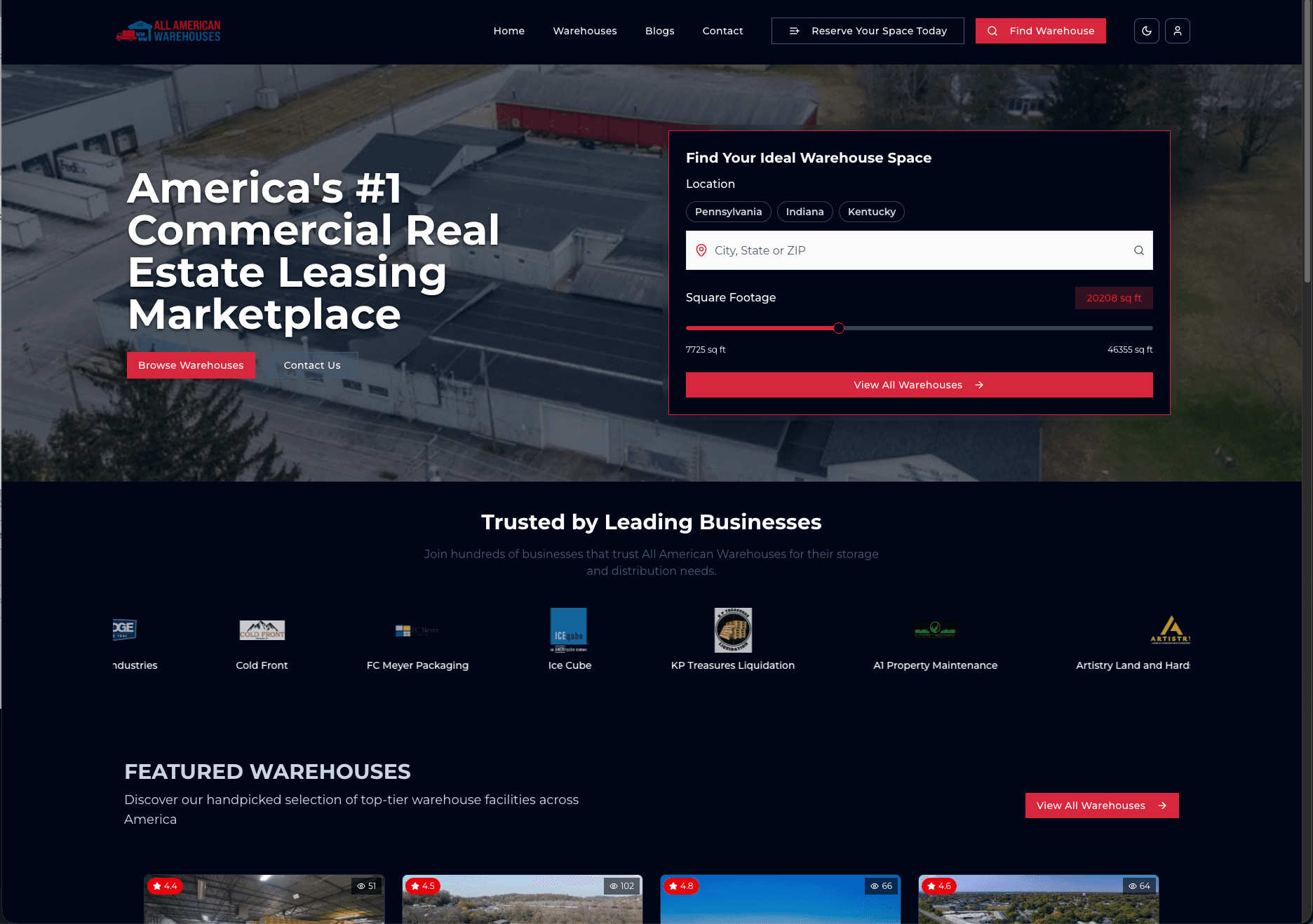
Helps people find warehouses that match their space, budget, and building requirements. Users can filter listings, view property photos and documents, and save properties with personal notes. The team manages listing information in one place to keep the website updated.
I developed property-browsing, CMS, sign-in, and favorites features across Next.js and Strapi. Another developer joined later and contributed to the project.
- Year
- 2025
- Category
- Real Estate
- Status
- Live
The challenges
Industrial property buyers need to compare location, available space, rental rates, and building features. The platform needed to make those requirements easy to search while giving the team a central place to maintain warehouse and unit listings.
Architecture
A Next.js website consumes Strapi-managed listings and an Algolia search index. Strapi owns listing content and index updates; shared contracts and environment schemas connect the applications in a pnpm/Turbo monorepo.
Strapi CMS
Manages warehouse and unit listings, with PostgreSQL in hosted environments. Listing lifecycle events trigger index updates.
Algolia index
Stores the searchable representation of listings, including the attributes used for property refinements.
Next.js website
Queries Algolia for filtered results and presents warehouse and available-unit pages.
What I built
I connected Strapi-managed page sections to reusable Next.js components, replacing hardcoded hero content with CMS fields for headings, images, and calls to action. I implemented the component-selection layer that maps Strapi’s dynamic-zone identifiers to the corresponding frontend sections, including featured warehouses, current listings, partners, and testimonials. This lets those pages render from structured CMS content.
I developed the warehouse-detail page layout and its image-gallery interface, including responsive image grids and fullscreen viewing. I then wired the page to Strapi queries by property slug, bringing in the warehouse’s name, location, images, highlights, overview, and available-space information. This connected the page layout to editable listing content.
On the Strapi side, I added content types for listing attachments and brokers and connected warehouse documents to the frontend. The attachment interface displays file names, document types, sizes, and dates, with links to open the files or external resources associated with a property.
I integrated NextAuth credentials sign-in with Strapi’s authentication endpoint and added JWT and session callbacks to carry the account state into the app. I also implemented middleware that redirects unauthenticated visitors away from dashboard routes, connecting the sign-in flow to the account interface.
I built the saved-property dashboard for warehouse and unit favorites, including separate tabs, loading feedback, error handling, and empty states. I added the notes interface so users can add and edit notes or remove saved listings, allowing each saved property to carry the user’s own context.
I added Strapi endpoints for each user’s saved properties, covering creation, updates, removal, and merging guest selections with duplicate checks. On the frontend, I implemented guest favorites in local storage and connected the guest-to-account merge flow, authenticated favorite actions, and note updates to the API. I refreshed cached favorites after changes to keep the displayed state aligned with those actions.
Further reading
Educational articles about related concepts. Their examples do not establish work completed on this project.
Related projects
View all projects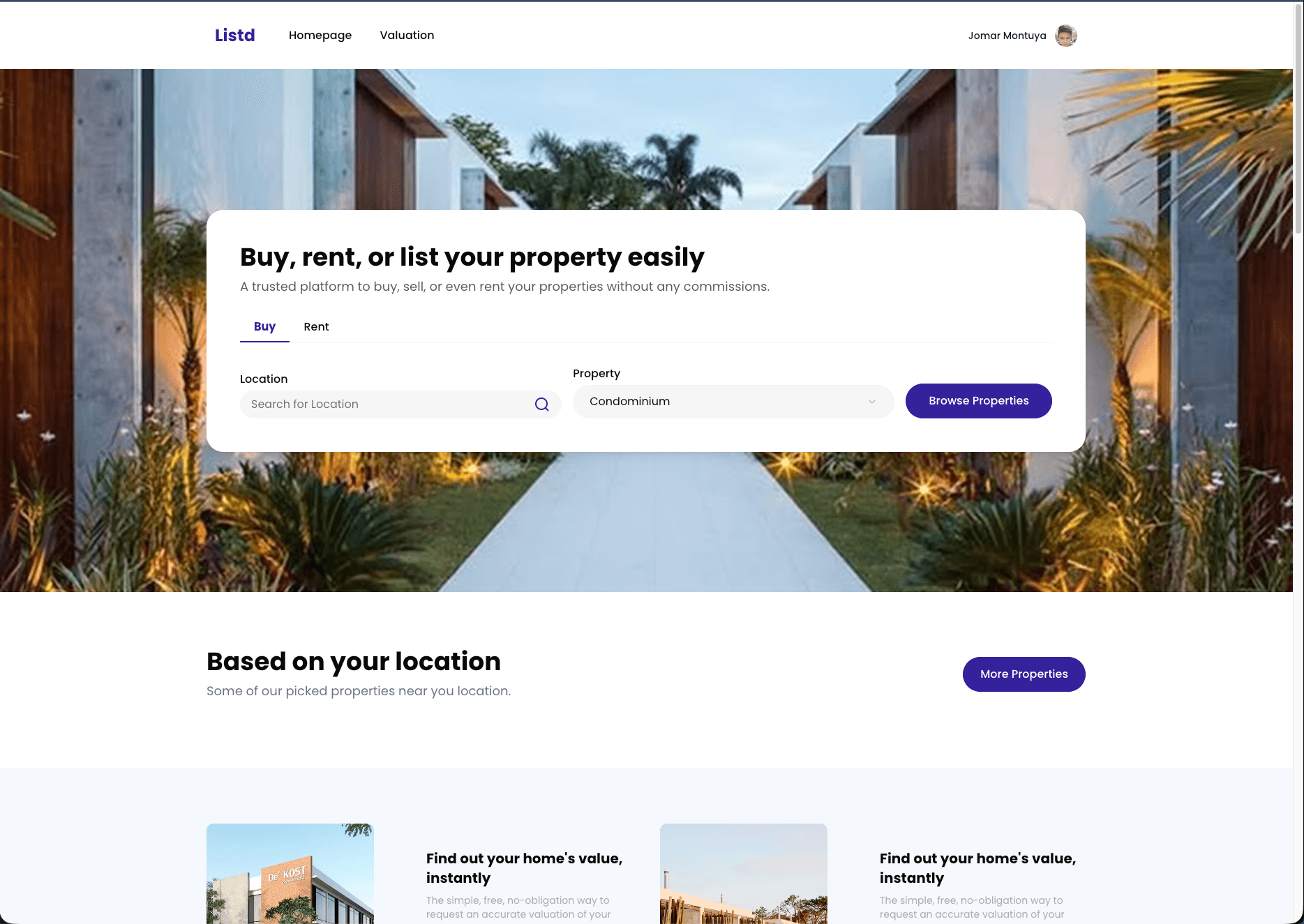
Case study · Real Estate
listd.ph
Helps people explore Philippine properties through search filters and an interactive map. Buyers can contact listing owners and share photos or documents within conversations, while sellers and agents can review AI-assisted price estimates. This connects property discovery with the information needed for further discussions.
Case study · Real Estate
55 Living Team
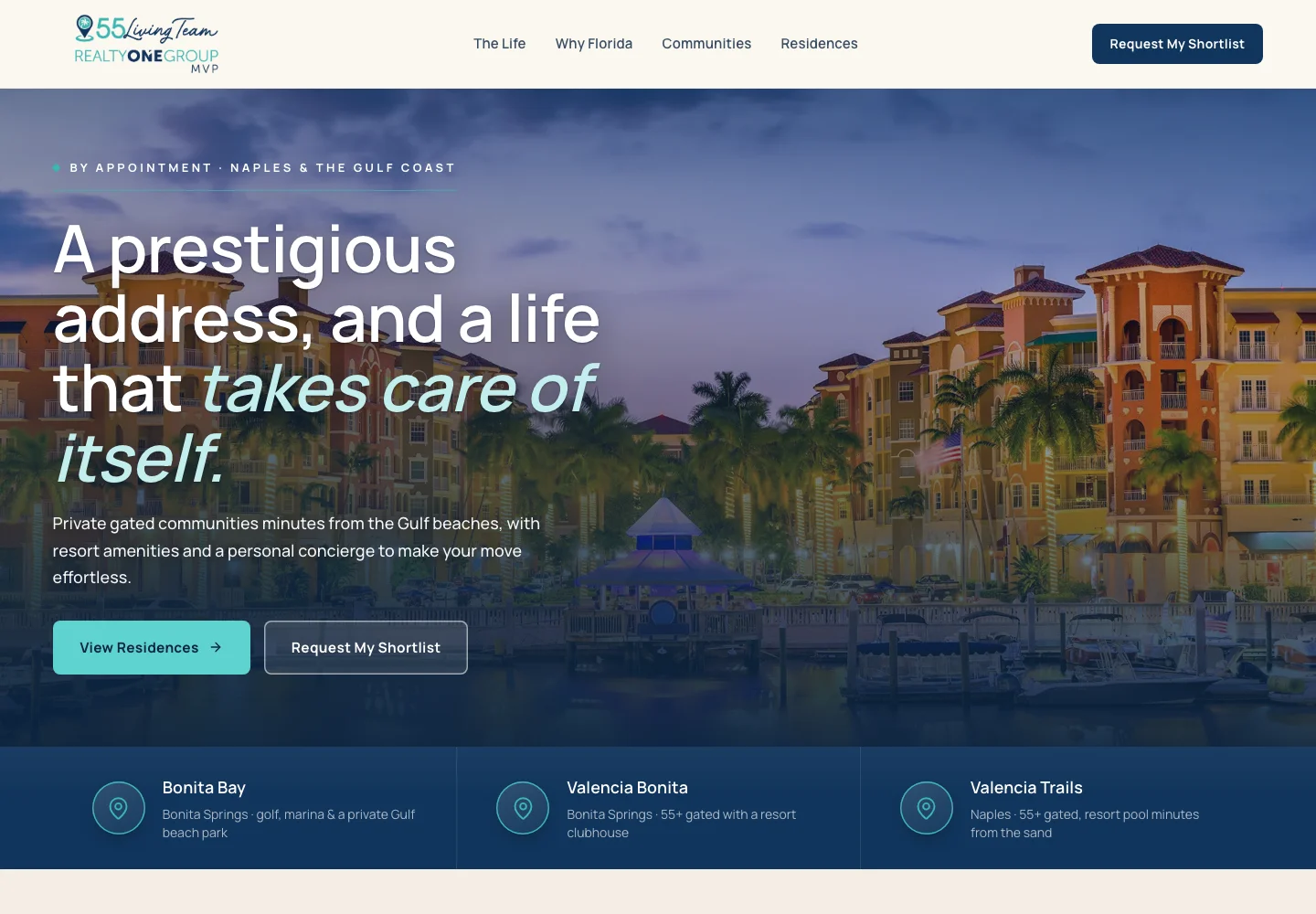
Helps buyers explore homes and communities in Southwest Florida. Property listings update automatically, and buyers can narrow their search by budget, location, home type, and features. Enquiries are saved before email delivery, so the team can still follow up if an email fails.

Case study · Booking Platform
Dink Avenue
A pickleball court-booking application where customers can check available times, select a court, and submit a reservation. Staff can review payments and manage bookings, while owners can review revenue reports and download records. The application is currently being tested with sample venue information.