AI
AI Approved the Return. The Policy Has Filed an Objection.
Mia’s return gets a confident yes from AI and a firm no from one missed policy condition. Follow the fictional mix-up to see why confidence and citations still need checking.

On this pageJump to section
Introduction
In this fictional example, Mia asks an AI assistant whether she can return a product she has used. “Certainly!” it replies, citing a 30-day return window. Mia starts packing. The policy starts preparing a disagreement.
Our invented policy allows returns within 30 days and permits opened packaging, but excludes used items. The assistant has read the welcoming paragraph and missed the bouncer standing immediately below it.
Mia does not need a more enthusiastic yes. She needs an answer that keeps the important condition. This example explains source checking; it is not advice about a real purchase or return policy.
The answer invited Mia. The exception checked the guest list.
An answer can be wrong because the source was missing, stale, or incomplete, or because the model failed to apply information it received. Treating every failure as one vague “hallucination problem” can hide the stage that needs repair.
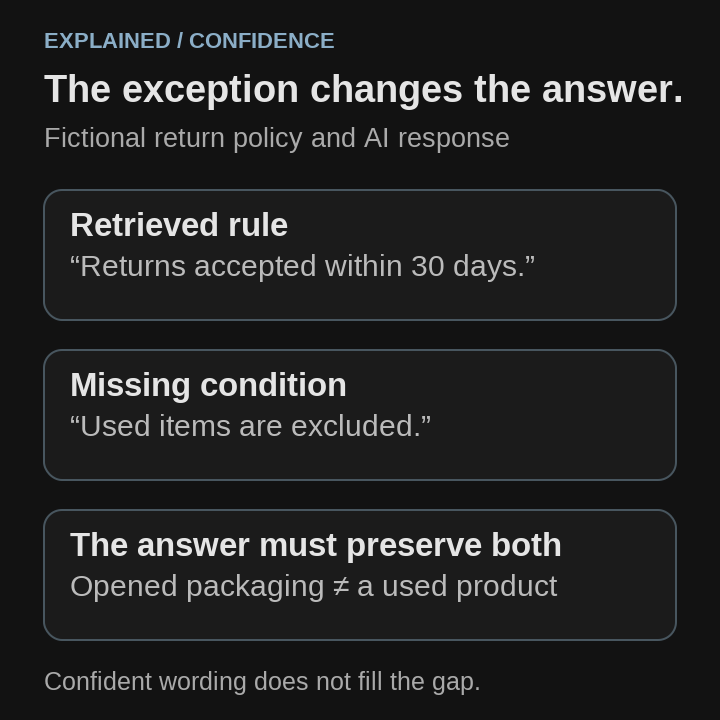
The 30-day rule alone does not establish that a used product qualifies. Opened packaging and product use are different conditions in this example. The answer needs the applicable rule and the exclusion, not just a reassuring deadline.
If the system never received the used-item exclusion, a prettier response cannot supply the missing evidence. If it received the exclusion but ignored it, the repair is different. Either way, Mia is holding a box because the wrong answer came dressed as the customer-service manager.
“Certainly” has no access to the returns department
“Certainly” is wording in a response, not an independently measured probability that this claim is correct. A hesitant answer can also be wrong. Tone tells you how the sentence sounds; verification tells you what supports it.
Mia can ask “Are you sure?” and receive a correction or an even longer yes. That question does not add independent evidence by itself. The assistant has been asked to reconsider its speech, not handed a new policy. Open the source and inspect the rule that applies to the used product.
A citation starts the inspection
Grounding connects model output to verifiable sources. It can reduce unsupported invention and make responses easier to audit. It does not make every conclusion drawn from a source correct.Google Cloud: Grounding responses in sources
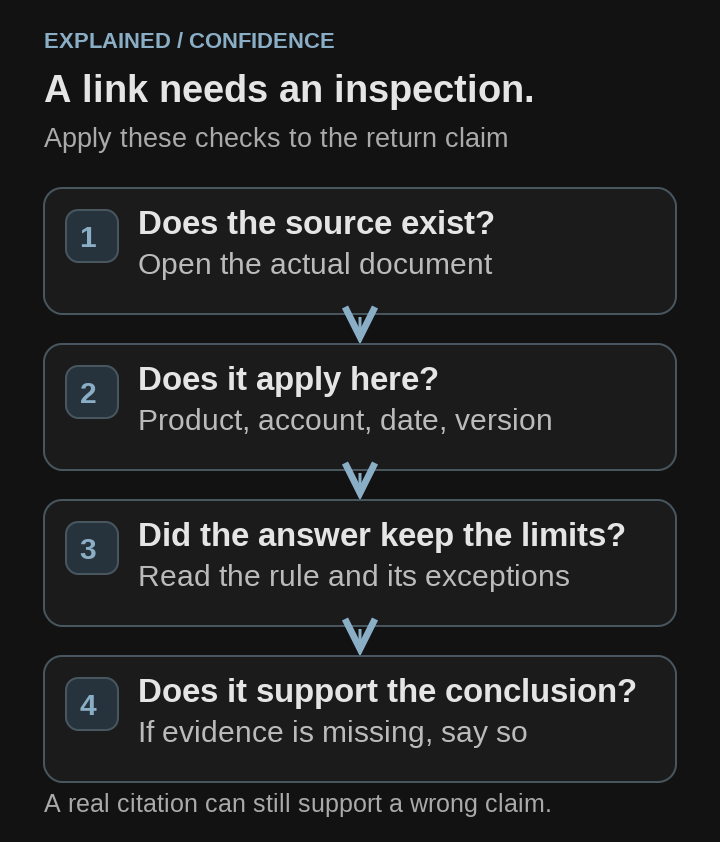
Open the source, verify that its version and conditions apply, then check whether the answer preserves the exception. A real link to a real policy may still sit beside an unsupported conclusion. For this used item, the cited general rule cannot erase the exclusion.
A real citation can still support only part of an answer. Mia’s assistant may link the genuine 30-day policy while skipping the genuine exclusion underneath it. The link has passed its ID check. Its argument is still trying to sneak past the queue.
Today’s facts need today’s lookup
If the question becomes “Has my refund arrived?”, the policy document is no longer enough. The answer needs the current order or payment record from the responsible system. A plausible status is not a successful lookup.
If the payment service is unavailable, explain that the refund status could not be checked. A newly generated sentence about yesterday’s record is still yesterday’s information wearing a clean shirt. Mia’s bank account will not update out of politeness.
Choose a check that can catch the mistake
For the hypothetical return, inspect eligibility and the product’s state. For a refund amount, compare the transaction record. For a compatibility claim, open the current specification. Define the check that would expose the relevant error.
- Verify the exact claim, not only the source’s existence.
- Keep dates, versions, and exceptions in view.
- Match review effort to the consequence of a mistake.
For Mia’s used product, a useful answer would retain the exclusion instead of promising a return. For her refund status, it would report what the responsible system actually confirms or say the lookup failed. Check the claim that changes her next action before she packs the box on the strength of “Certainly.”
Key takeaways
- Treat confident wording as presentation, not proof.
- A source must support the exact claim and preserve its exceptions.
- Use a successful current lookup for live records.
- Make review specific enough to catch the mistake that matters.