Case study · AI Application
Syntara
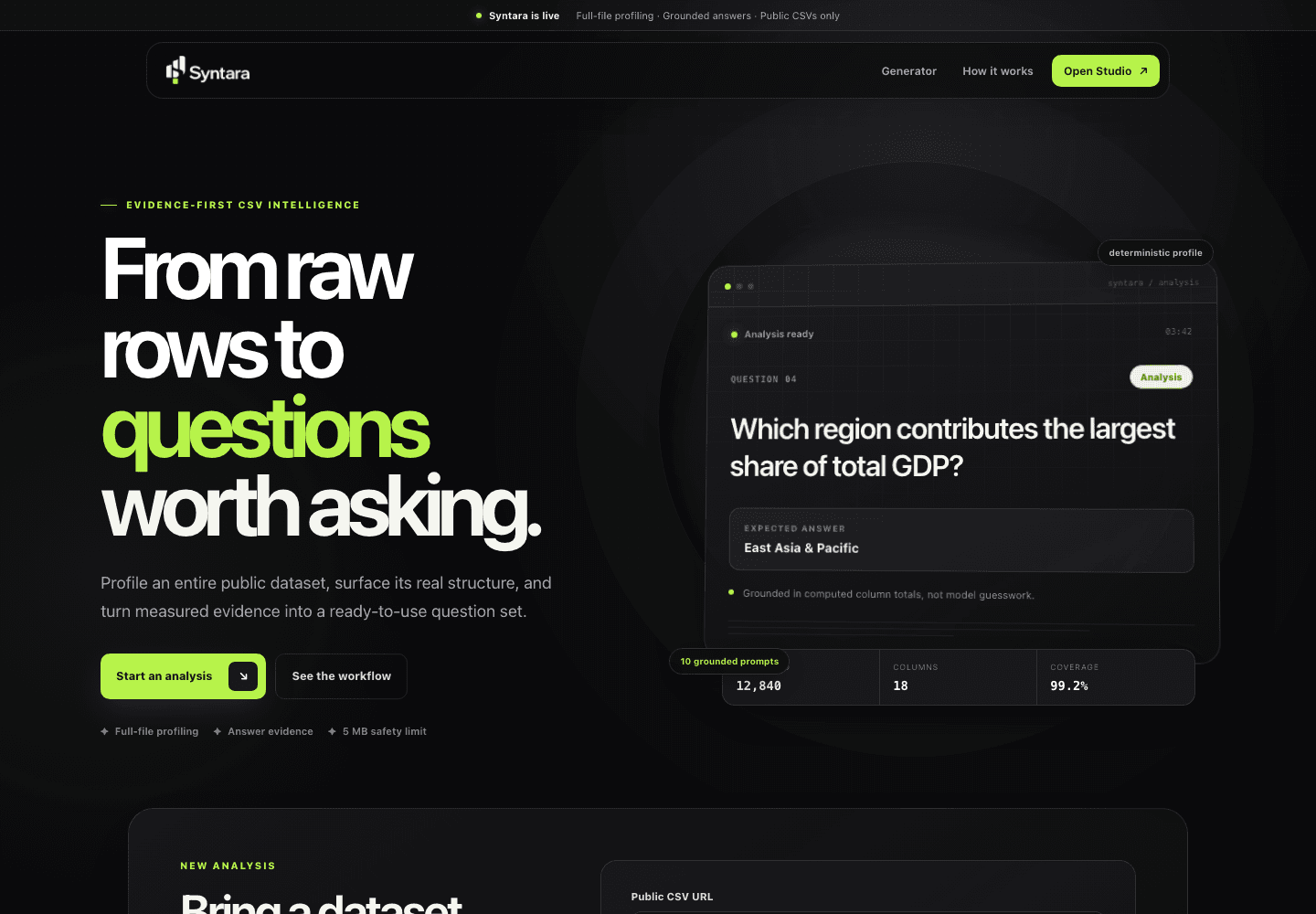
Turns a publicly accessible spreadsheet-style data file into learning questions, suggested answers, and supporting information. Users paste a file link, choose how many questions they want, and review the results alongside statistics from the data. This helps them explore the information and check what supports each answer.
I built Syntara independently with AI-assisted development, from the interface and CSV profiling to the Mastra and Gemini workflow.
- Year
- 2026
- Category
- AI Application
- Status
- Live
The challenges
Turning a CSV into useful learning questions requires more than sending a few rows to a language model. Missing values, inconsistent records, and numeric distributions affect what the data can actually support. Syntara pairs full-file profiling with AI generation so users can review questions alongside the computed statistics and sample records that inform them.
Architecture
A lightweight HTML, CSS, and JavaScript frontend calls a TypeScript API served by Mastra. The workflow downloads and profiles the CSV, then uses separate Gemini agents for summarization and question generation. Zod defines the request, dataset profile, and structured question formats.
Fetch and profile
Validate the public HTTP(S) URL, check redirects and download limits, and parse the file with csv-parse. Compute column types, missing and distinct values, frequent values, and numeric statistics across the dataset.
Summarize the evidence
A Gemini summarization agent receives the computed profile and sample rows, with instructions to use only supported claims and treat dataset values as untrusted input.
Generate and review
A second Gemini agent uses the profile and summary to produce structured questions with categories, difficulty levels, expected answers, and evidence. The interface presents these beside the dataset metrics and column profiles.
What I built
Users paste a public CSV URL, choose between 5 and 20 questions, and run the analysis from a single page. A sample dataset, progress feedback, and error messages help guide the workflow. The frontend and API share the same Mastra deployment on Vercel.
The download tool checks resolved addresses for private and reserved networks, revalidates redirect destinations, and enforces content-type checks, a 5 MB file limit, a 15-second fetch timeout, and a maximum of three redirects. The profiler limits datasets to 100 columns and reports records whose field counts differ from the header.
CSV parsing handles quoted commas, escaped quotes, byte-order marks, and multiline fields. The profiler calculates missing-value counts, distinct and frequent values, and numeric minimums, maximums, means, and medians before either AI agent runs. The agents receive this profile with five sample rows rather than the entire raw file.
Each generated question includes a category, difficulty, expected answer, and supporting evidence. Users can search the question set, filter by category, expand answers, and copy the results. Structured output validates the response shape; the visible evidence helps users check the generated answers against the profile.
Further reading
Educational articles about related concepts. Their examples do not establish work completed on this project.
Related projects
View all projects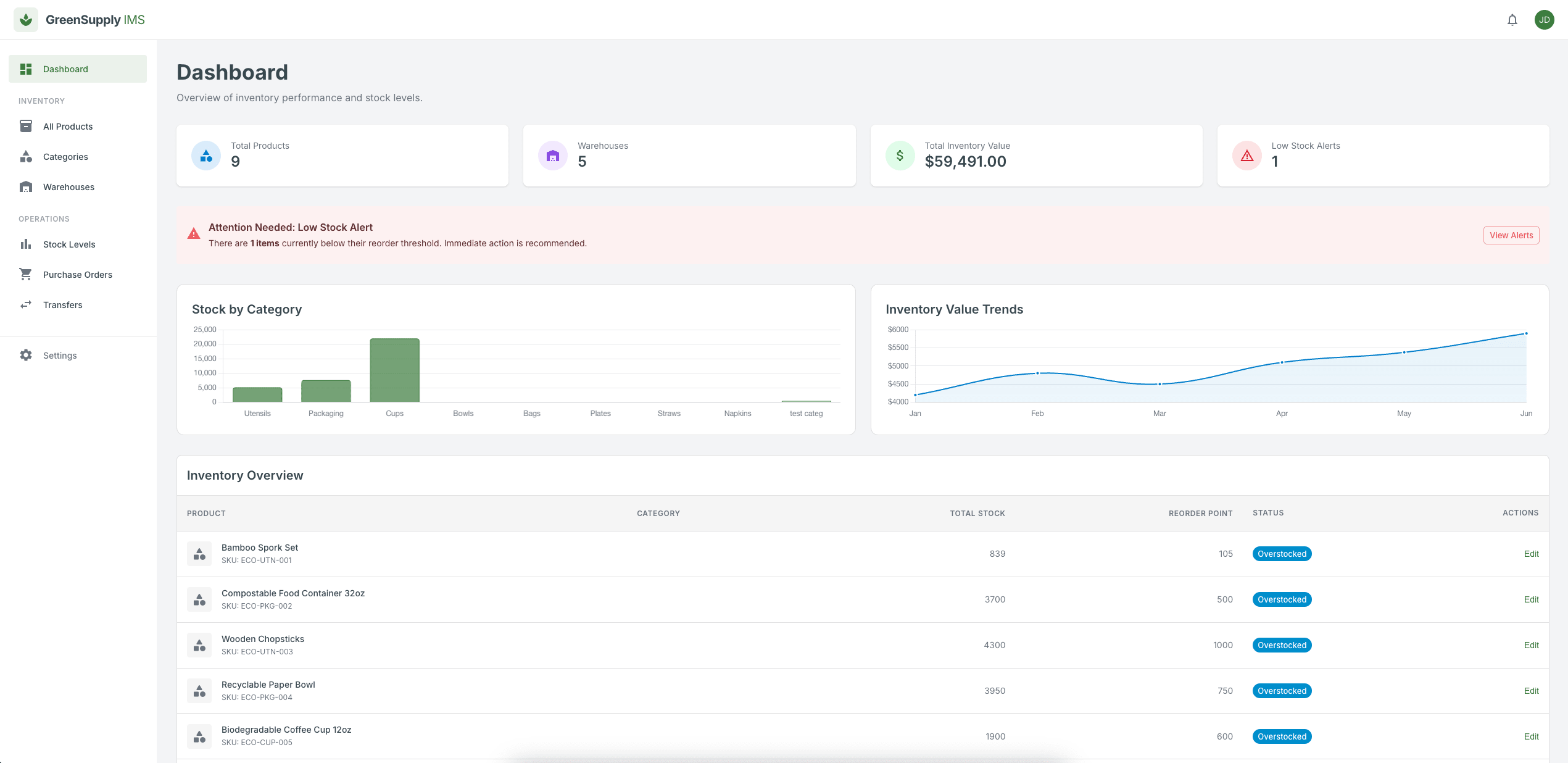
Project overview · Platform
Green Supply (Playground)
An inventory-management practice application for checking stock across warehouses. Users can review stock levels, see which items need reordering, and manage transfers between locations. It brings stock information together to help users decide what to replenish or move.
Case study · Real Estate
listd.ph
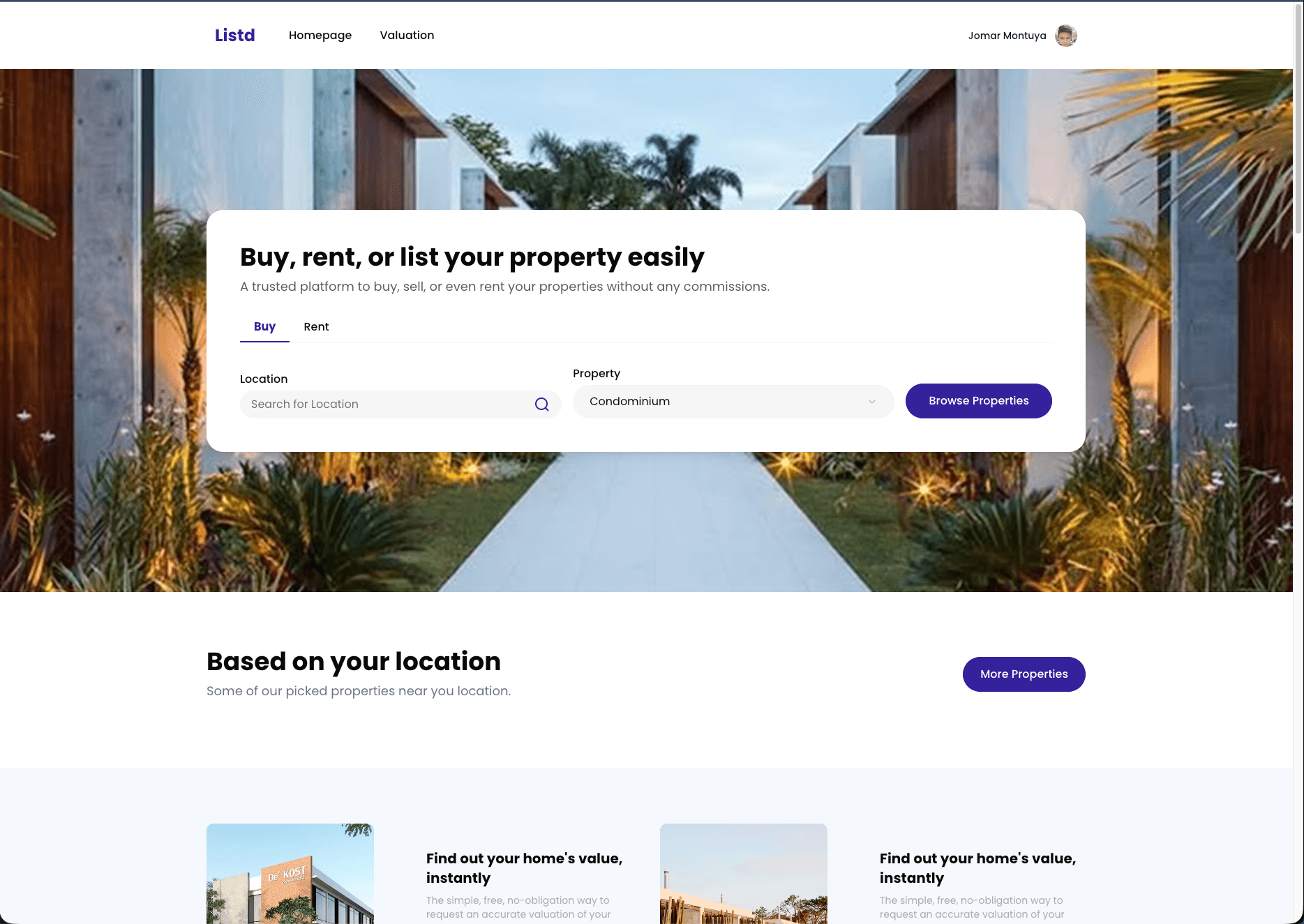
Helps people explore Philippine properties through search filters and an interactive map. Buyers can contact listing owners and share photos or documents within conversations, while sellers and agents can review AI-assisted price estimates. This connects property discovery with the information needed for further discussions.
Case study · Real Estate
All American Warehouse
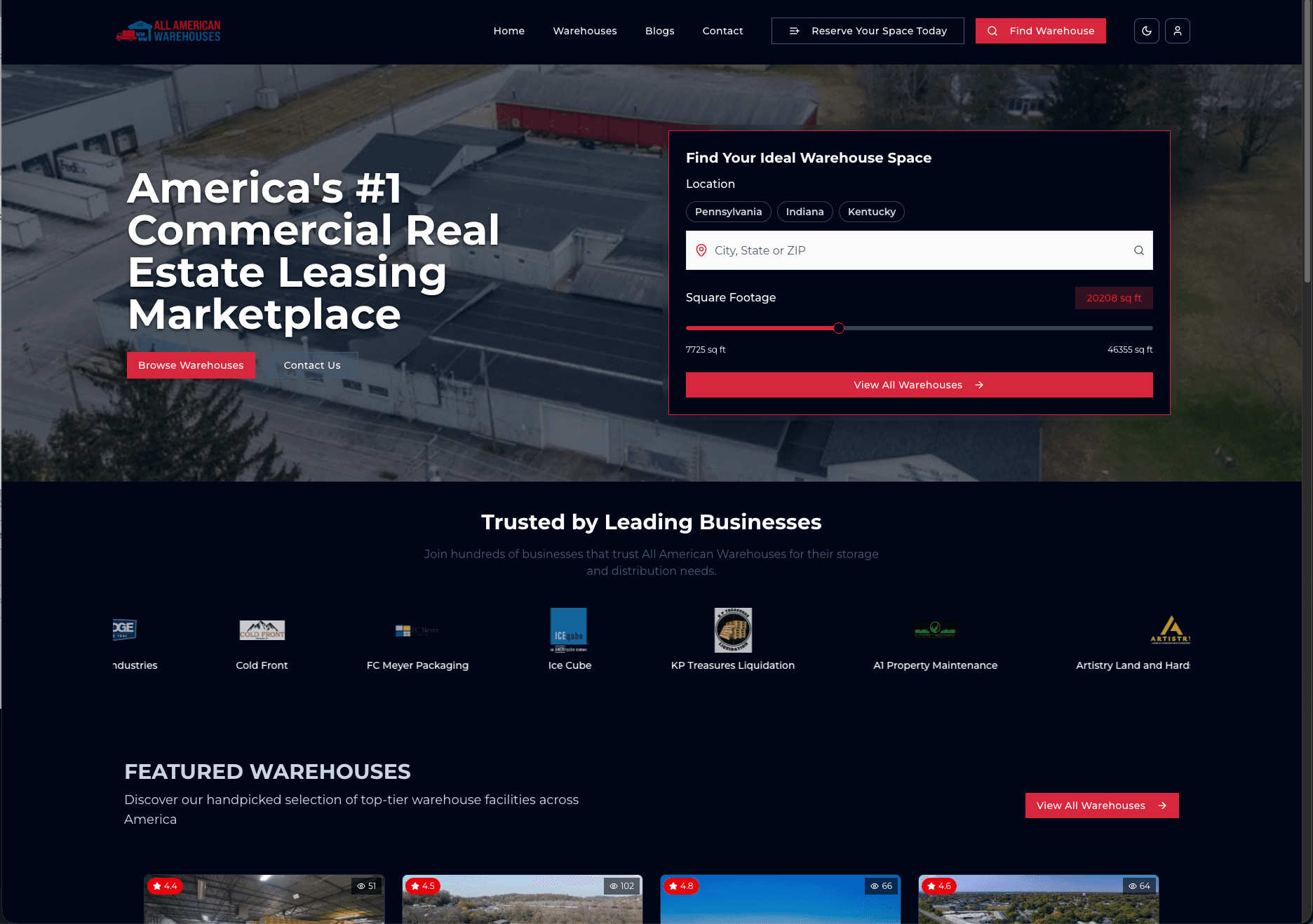
Helps people find warehouses that match their space, budget, and building requirements. Users can filter listings, view property photos and documents, and save properties with personal notes. The team manages listing information in one place to keep the website updated.